
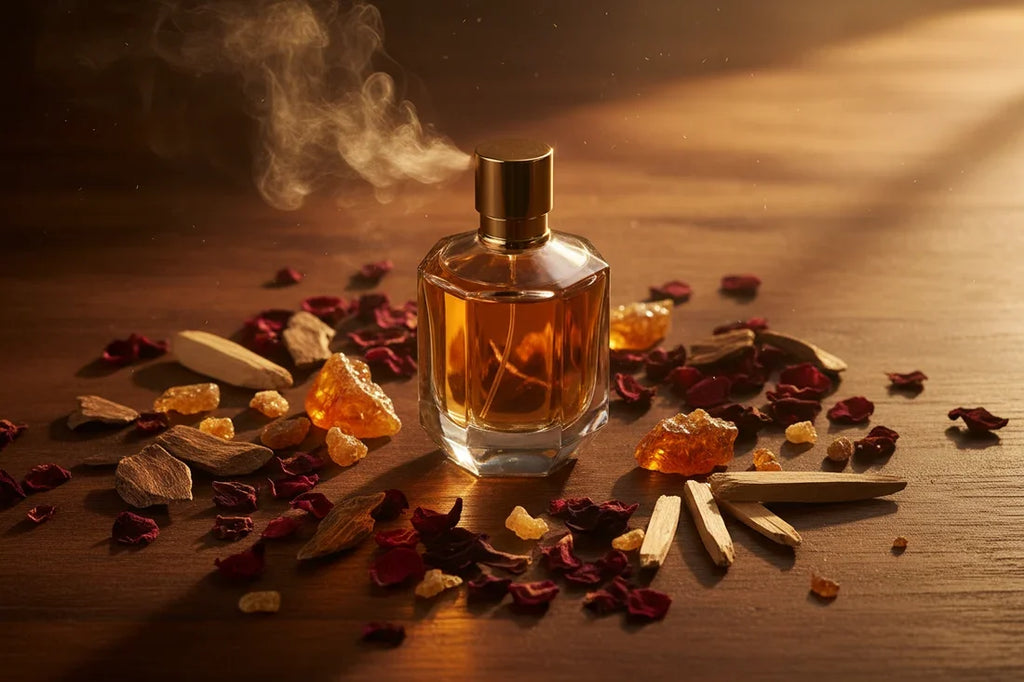
Why Does Oud Smell Different on Everyone? The Science Behind Skin & Scent
Have you ever loved the way an oud smelled on someone else, only to try the same one and wonder where that beautiful scent went? On one person, it may smell warm, smooth, and slightly sweet. On another, the same oud can come across as smoky, sharp, woody, or much softer.
You are not imagining the difference. There is a real science of skin and scent behind it. Fragrance does not smell the same once it comes into contact with skin because everyone's skin has its own mix of oils, moisture, temperature, and other biological factors.
This is also why choosing an oud from SA by Saeed Anwar is only the first part of the experience. The same oil can develop differently depending on who wears it. Once you understand what your skin is doing to a fragrance, it becomes much easier to understand why an oud you loved on somebody else may smell completely different on you.
Skin PH: The Invisible Factor Behind Every Scent
The skin has a larger part to play in perfume than you might think. After applying your oud, skin chemistry and perfumes can impact how it develops. The pH of healthy skin ranges from pH 4.5 to 5.5, although this may differ from individual to individual. Other factors such as skincare, washing habits, and moisture can make a difference.
That's where skin pH and fragrance come into play. Lighter fragrance materials tend to evaporate more quickly; heavier fragrance materials stay longer. Hence, different top notes vs base notes on skin. Use the Pure Ouds collection to experience how oud grows on your skin.
Oily Skin vs Dry Skin: Why Longevity Isn't Equal for Everyone
Skin type can make a surprisingly noticeable difference to fragrance. When people talk about oily skin vs dry skin perfume, they are often talking about longevity as much as smell.
Sebum is the natural oil produced by your skin. It can give fragrance something to sit on, which may slow down the evaporation of some fragrance materials. This is why people with oilier skin often find that perfume stays noticeable for longer.
Dry skin does not have the same amount of natural oil on its surface. As a result, some fragrance materials, especially lighter ones, may disappear more quickly. You might apply the same number of drops as someone else and find that the scent has become much quieter after an hour or two.
That does not mean oud is unsuitable for dry skin. A simple trick is to apply an unscented moisturiser first and let it settle before applying the fragrance. The moisturised surface can give the perfume a little more to hold onto. It is better to use an unscented product if you want to experience the oud without another fragrance getting in the way.
Natural oil is only one part of the picture, but it can explain why the same fragrance lasts differently on two people. If you want to see how an oil behaves on your own skin, you could try something such as Sahara and pay attention to how long the scent remains noticeable.
Body Heat and Why Oud Specifically Reacts So Strongly
Heat is another reason fragrance can behave differently throughout the day. Body temperature and fragrance have a direct connection because warmth affects how quickly fragrance molecules move from the skin into the air.
This is one reason people often apply perfume to areas such as the wrists and neck. These areas can be relatively warm, allowing the fragrance to become noticeable as it develops.
Oud is particularly interesting here. It is generally associated with deep, rich materials rather than only bright and fleeting notes. Depending on the oud, you may notice woody, smoky, earthy, leathery, resinous, or animalic qualities. These deeper characteristics can remain noticeable after the lighter opening has faded.
When skin is warmer, fragrance can evaporate more quickly, which may make the scent seem stronger or more noticeable. This does not mean hotter skin automatically makes every fragrance better. It simply changes the way the fragrance is released.
The weather can make a difference too. An oud worn inside an air-conditioned room may seem quite different when you step outside into Karachi's heat and humidity. Exercise, a hot shower, and even a warm day can all change the conditions on your skin.
For that reason, it is useful to try an oud in the conditions in which you normally wear fragrance. You can compare different options in the Oil collection and notice how their projection and dry-down change with your own body heat.
The Skin Microbiome Fragrance Science's Newest Discovery
There is another part of the story that is easy to forget: your skin is home to microorganisms. Bacteria, fungi, and other tiny organisms live on the skin as part of a community known as the skin microbiome.
That community is not the same for everyone. It can vary according to the area of the body, moisture, sebum, age, environment, and everyday habits. The products you use and the amount of sweat on your skin can also affect the conditions in which these microorganisms live.
So what does this have to do with perfume?
Researchers are increasingly interested in the relationship between the skin microbiome and scent. Some microorganisms can interact with compounds on the skin and break down or transform certain substances. Because fragrance contains many different compounds, these interactions may contribute to subtle changes in the way some smells are perceived.
It is important not to take this too far. Your skin bacteria are not simply turning one perfume into a completely different perfume. Fragrance chemistry is much more complicated than that, and research into the microbiome's exact role is still developing.
What we do know is that skin is not an inactive surface. Once you apply perfume, it is surrounded by natural oils, moisture, heat, and microorganisms. All of these things exist together, and they can influence how the fragrance behaves.
This also explains why the phrase "skin chemistry" does not refer to one mysterious ingredient in your body. It is really a combination of different physical and biological conditions.
The microbiome is an especially interesting area of fragrance research, but there is still plenty to learn. It would be premature to claim that it is the main reason two people smell completely different wearing the same oud. It is better understood as one possible piece of a much bigger picture.
So Why Does Oud, Specifically, Vary So Much From Person to Person?
So, does oud smell different on everyone? Yes, it can. Oud is a complex material, and this means that it can have different aspects or qualities on each individual that are woody, smoky, earthy, or sweet. The settling and the notes that you perceive most will depend on your natural oils, body temperature, and natural skin pH. The weather and skincare products are also factors to consider. This is because an oud with a strong sense of smoke and richness might feel more woody or soft for your friend than it does for you. The best way to experience how Cambodi oud develops is to try it out on your own skin!
How to Actually Test Oud on Your Own Skin
Want to know how to test perfume on your skin properly? Apply to the wrist or the inside of your elbow with a small amount of the product on clean, unscented skin. Do not rub in; rather, let it sit. The opening of the first few minutes is only visible, so remember to listen to the oud for at least 20-30 minutes before making a judgment. Come back to smell it later and observe the dry-down. See if it works on a non-showery, sweaty day. When purchasing a full bottle of oud oil, consider sampling oud oil before buying. If you are interested, you can do oud testers first, then see how the smell is going to react on your skin.
Frequently Asked Questions
Why does the same perfume smell different on two people?
Perfume interacts with the skin rather than simply sitting on top of it. Differences in natural oils, moisture, temperature, and skin conditions can change how quickly fragrance materials evaporate. The skin microbiome may also have a subtle role.
Does oily or dry skin hold fragrance better?
Oily skin generally helps fragrance last longer because sebum can slow the evaporation of some fragrance materials. Dry skin may allow lighter materials to disappear sooner. Applying an unscented moisturiser before perfume can give fragrance a better surface to cling to.
Why does oud specifically seem to vary more than other scents?
Oud can contain several different scent characteristics at once, including woody, smoky, earthy, sweet, and animalic facets. As these develop at different rates, changes in skin and temperature can make certain parts of the oud more noticeable than others.
Can body temperature really change how a fragrance smells?
Yes. Warmer skin can increase the rate at which fragrance molecules evaporate, which may make the scent seem stronger or more noticeable. This can be particularly noticeable with rich fragrances containing woody, resinous, and musky materials.
What's the best way to know if an oud will suit me before buying a full bottle?
Try the oud directly on your own skin instead of relying only on a paper strip or another person's experience. Give it at least 20 to 30 minutes to develop and, if possible, smell it again later. This gives you a much clearer idea of its actual dry-down and longevity.
أحدث المنشورات
27.September.2026
Why Does Oud Smell Different on Everyone? The Science Behind Skin & Scent
0 Comments
18.September.2026


