
Cart
0
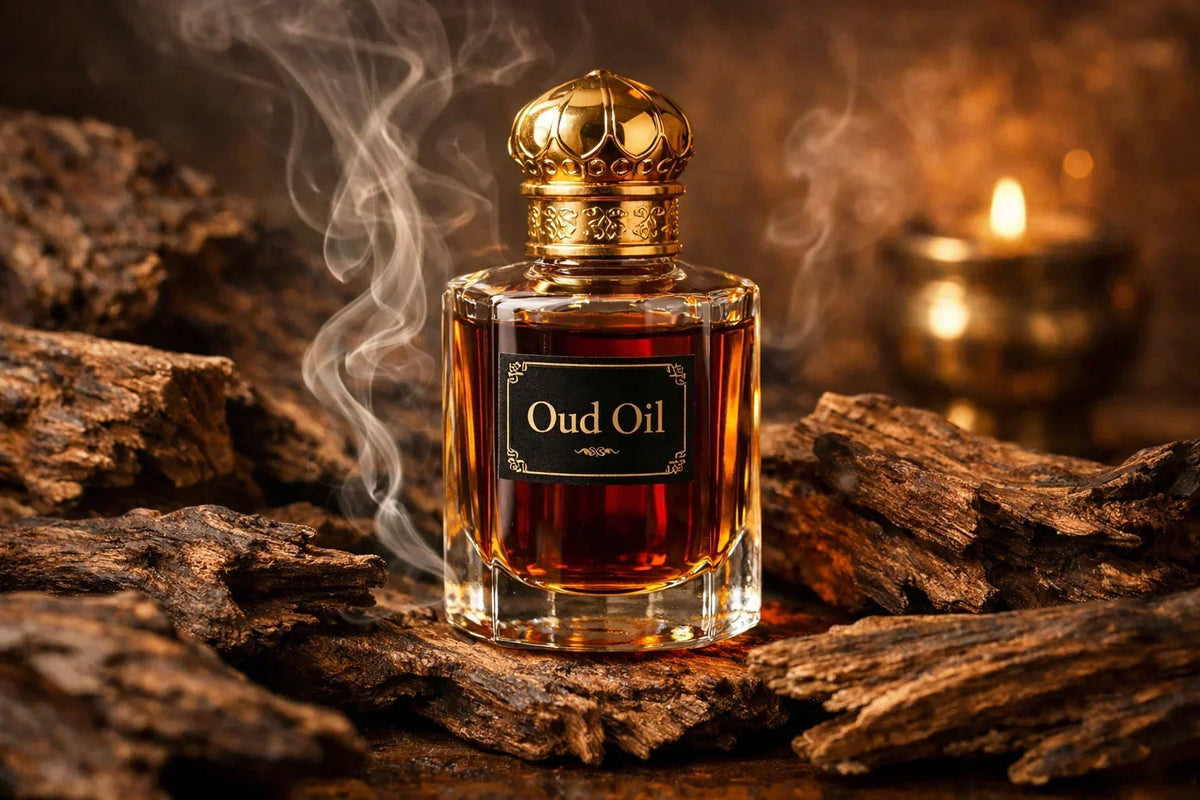
Why is oud so expensive? Oud is expensive because only a small percentage of agarwood trees ever produce the resin naturally, the resin needs years to mature inside the wood, extraction is slow and largely manual, and global demand keeps rising against a shrinking, conservation-restricted wild supply — which is why genuine pure oud oil is often called “liquid gold.”
Oud is one of the most expensive and luxurious fragrance ingredients in the world. It is extracted from a resin found inside certain agarwood trees and is commonly called liquid gold because of its deep, rich scent and extraordinary value. Global demand for oud has continued to grow into 2026, and it remains a symbol of prestige in the world of perfumery.
Want the basics first — what oud actually means and where the word comes from? Start with our Oud Meaning & Benefits guide. This page goes deep into one question only: what makes oud cost what it does, and whether it's worth paying for.
The Rare Source of Oud
Oud forms inside the agarwood tree after a fungal infection: as a natural defence, the tree produces a dark, fragrant resin that slowly saturates the heartwood over years. Only a small percentage of wild Aquilaria trees ever develop this resin naturally, and even an infected tree yields a limited amount of usable, resin-dense wood — which is the starting point for everything about oud's price. An ingredient this rare was never going to be cheap.
For the full explanation of how agarwood forms and what the word “oud” actually means, see our Oud Meaning guide.
Oud Prices in 2026: What's Changed
The global agarwood and oud market has kept expanding into 2026. Industry market-research reports place the broader agarwood market in the multi-billion-dollar range worldwide, with several forecasting continued high single-digit to double-digit annual growth over the next several years, driven by luxury perfumery, wellness, and traditional-medicine demand.
Supply hasn't loosened to match. Most Aquilaria species remain listed under CITES (the international convention on trade in endangered species), which restricts legal export and import of wild-harvested wood and oil. Combined with rising demand from the Gulf, South Asia, and a growing Western niche-fragrance market, wholesale prices for high-grade wild agarwood have continued climbing in 2026, with premium wild-harvested material trading at a steep premium over plantation-grown wood.
The practical takeaway for buyers: genuine pure oud isn't getting cheaper, and pricing that looks unusually low for “pure oud” in 2026 is a stronger red flag than ever — more on that below.
SA by Saeed Anwar Oud Range & Price Guide (2026)
Pricing below reflects our range as of this update — please confirm against your live price list before publishing, since oud pricing shifts with each new batch and origin.
|
Oud Type |
Origin |
Approx. Price |
Why This Price |
|
Dehn Al Oud Cambodi |
Cambodia |
Rs. 5,400 / tola (12ml) |
Cambodian pure oud — rarest origin, most complex scent |
|
Hindi Suyufi (3ml) |
India |
Rs. 19,125 |
Premium Indian oud — deep, smoky, long-lasting |
|
Maliki Double Super (3ml) |
India |
Rs. 17,000 |
High-grade Indian oud — rich intensity, aged character |
|
Oud Mukhalat |
Blended |
Rs. 3,600 |
Oud blended with complementary oils — ideal entry point |
|
Oud Burmi |
Blended |
Rs. 3,570 |
Accessible everyday oud — smooth, wearable, long-lasting |
The Time-Intensive Process Behind the Price
Producing pure oud oil is a delicate, labour-intensive process — traditional steam distillation and water-soaking alone can take days or weeks, and the finest oils are then aged for years afterward to deepen their richness and complexity. That maturation time is a direct, deliberate cost: an aged premium oud has literally had capital tied up in a warehouse for years before it ever reaches a bottle.
For the full step-by-step extraction process — infection, harvesting, soaking, distillation, grading — see the extraction breakdown in our Oud Meaning, Benefits & Why It's Expensive guide.
Key Reasons Why Oud Is So Expensive
Limited Supply and High Demand
The core reason behind oud's high price is straightforward economics. Supply is extremely limited while global demand — particularly from the Middle East, South Asia, and luxury Western markets — continues to rise every year, and CITES protections on wild agarwood species mean legitimate supply can't simply scale up to meet it.
Natural vs. Synthetic Oud
Synthetic oud is far cheaper to produce in a laboratory, but it simply cannot replicate the depth and authenticity of natural oud. Fragrance connoisseurs consistently choose natural oud for its complexity, warmth, and character, which keeps demand — and price — concentrated on the genuine article rather than shifting to cheaper alternatives.
Quality, Origin, and Purity
The price of oud varies significantly based on where it comes from. Cambodian wild oud, like our Dehn Al Oud Cambodi, is considered among the finest in the world. Indian (Assam) oud, such as our Hindi Suyufi, is prized for its deep, smoky intensity. Malaysian oud offers a softer, lighter profile. Each origin commands a genuinely different price.
Labor and Craftsmanship
Every stage of oud production — from harvesting infected agarwood to hand-distilling the oil — demands skilled craftsmanship and significant time investment. This artisanal effort is baked into the price of every genuine oud oil, and it's part of why mass automation hasn't been able to bring the price down.
Why People Still Pay for Oud
• Long-lasting, powerful performance: even a small application can stay on skin for eight hours or more, sometimes well past a full day — and because only 1–2 drops are needed per application, a single bottle lasts far longer than most spray perfumes.
• A unique, complex scent profile: deep, smoky, woody, and slightly sweet, with layers that evolve on the skin over time — a complexity that simply isn't found in ordinary mass-market perfumes.
• Status and luxury appeal: owning oud is widely regarded as a mark of refinement, associated with exclusivity and sophistication across cultures worldwide.
• Cultural and emotional value: across South Asia, the Middle East, and Southeast Asia, oud carries deep spiritual and emotional significance, used in religious ceremonies, weddings, and important life events — far more than just a fragrance.
Is Oud Worth It? The Cost-Per-Use Math
Pure oud isn't just a perfume — for regular wearers, it behaves more like an investment. Because each application requires only 1–2 drops, a genuine oud oil can last far longer than its upfront price suggests.
Take Pakistan as a concrete example: a quality spray perfume at roughly PKR 3,000–5,000 might last 3–4 months with regular use. A pure oud oil at roughly PKR 5,000–8,000 can easily last 12+ months with the same daily usage, simply because the concentration and application method are completely different. Run the same math against local spray-perfume prices anywhere else in the world, and the comparison holds up the same way.
For those new to oud, a mukhallat blend is the ideal starting point — it gives the oud experience at an accessible price point, without the full commitment of a pure oil. And if you want to understand the difference between real and synthetic before spending, read our guide on pure oud vs. mixed oud.
Who Should Invest in Oud Fragrances
• Fragrance enthusiasts: people who love exploring unique, rare scents are natural oud buyers — its identity is unlike anything else in the fragrance world.
• People who prefer premium scents: those who appreciate depth, longevity, and craftsmanship in their perfumes are consistently drawn to oud-based fragrances.
• Special occasions and gifting: oud is one of the most respected and welcomed gifts at weddings, Eid celebrations, and formal events — its premium image makes it a natural choice for luxury gifting.
Affordable Alternatives to Pure Oud
For those not ready to invest in pure oud, our Oud Mukhallats collection blends oud with floral, woody, or amber oils — significantly more affordable while still delivering a rich, oud-forward experience.
Common Misconceptions About Oud
Many people believe all oud smells the same, or that synthetic oud is equivalent to natural. In reality, every origin of oud has its own unique scent profile, and natural oud is incomparably more complex — the origin of the agarwood, the distillation method, and the age of the oil all produce a completely different result.
Buying Authentic Oud Without Overpaying
Always check the source, concentration, and reputation of the seller. Be very cautious of products claiming to be “pure oud” at extremely low prices — in most cases, they're synthetic mixtures with minimal or no actual agarwood content. Buy from verified, trusted brands with transparent sourcing.
For a full worldwide buying checklist — labelling, testers, returns, and reviews — see the buying guide in our beginner's guide to oud.
Where to Buy High-Quality Oud Fragrance Oils
SA by Saeed Anwar sources and verifies every oud oil in its collection. Whether you're new to oud or an experienced collector, there's an option at every level:
For a beginner-friendly entry point, Oud Mukhalat (Rs. 3,600) is the most popular choice — a beautifully blended oud that's accessible, long-lasting, and easy to wear daily. If you're ready to explore pure oud, Dehn Al Oud Cambodi (Rs. 5,400) delivers the signature Cambodian oud experience at a genuine price. For those seeking premium Indian oud, Hindi Suyufi (Rs. 19,125) represents the deep, smoky character that serious oud collectors seek.
Browse the full range, including Oud Burmi and Maliki Double Super, in our verified Oud collection.
Frequently Asked Questions
Why is oud more expensive than other perfumes?
Because it's extremely rare, requires a complex, labour-intensive production process, and is derived from a natural resin that forms in only a small percentage of agarwood trees worldwide.
Is oud worth the money?
For most people who try it, yes. Its exceptional longevity, unique complexity, and the tiny amount needed per use make it excellent value over time, particularly compared to regular spray perfumes.
How long does oud last on the skin?
High-quality pure oud typically lasts between 8 hours and over 24 hours, depending on the concentration, origin, and skin type.
Why do people love oud so much?
Its deep, smoky, woody, and slightly sweet character is unlike any other fragrance in existence. It also carries significant cultural and emotional resonance across many traditions.
What is the difference between real and synthetic oud?
Real oud is derived from natural agarwood resin. Synthetic oud is produced in a laboratory and, while it may mimic some surface notes, it lacks the complexity, depth, and character of genuine natural oud oil.
Can beginners wear oud?
Absolutely. Beginners are best served starting with a lighter mukhallat blend before exploring stronger single-origin pure ouds.
How can I identify high-quality oud?
Look for natural complexity in the scent (it should evolve on the skin), confirm the geographic origin, and purchase only from reputable brands with verified sourcing.
Why is oud so expensive compared to regular perfumes?
Natural resin infection occurs in only a small percentage of agarwood trees. Even an infected tree yields a limited amount of oil, and the distillation process can take weeks to complete. This combination of extreme rarity and intensive production is exactly why pure oud is called liquid gold.
Is cheap oud real oud?
Almost certainly not. Any product sold as “pure oud” at an unusually low price is almost always synthetic or heavily diluted with carrier oils. Genuine pure oud starts at a meaningful minimum price point — anything significantly below your market's typical range should be treated with scepticism.
Where can I buy authentic oud?
SA by Saeed Anwar is a trusted oud brand with full transparency in sourcing and distillation. Every oil in the collection is verified for purity and origin before it reaches the customer.
Conclusion The True Value Behind Oud's Price and Popularity
Oud is expensive because it's genuinely rare, genuinely difficult to produce, and genuinely irreplaceable. From its natural formation deep inside infected agarwood trees, to the weeks-long distillation process, to years of careful aging, every step adds real, measurable value. And despite the price, people continue to choose oud for its unmatched scent complexity, deep cultural significance, and long-lasting performance. Once you understand what goes into every drop, the price makes complete sense.
Ready to experience real oud? Browse SA by Saeed Anwar's verified collection — from the accessible Oud Mukhalat (Rs. 3,600) to the premium Hindi Suyufi (Rs. 19,125). Every oil is sourced and verified for purity. Explore the full collection →


