
Cart
0
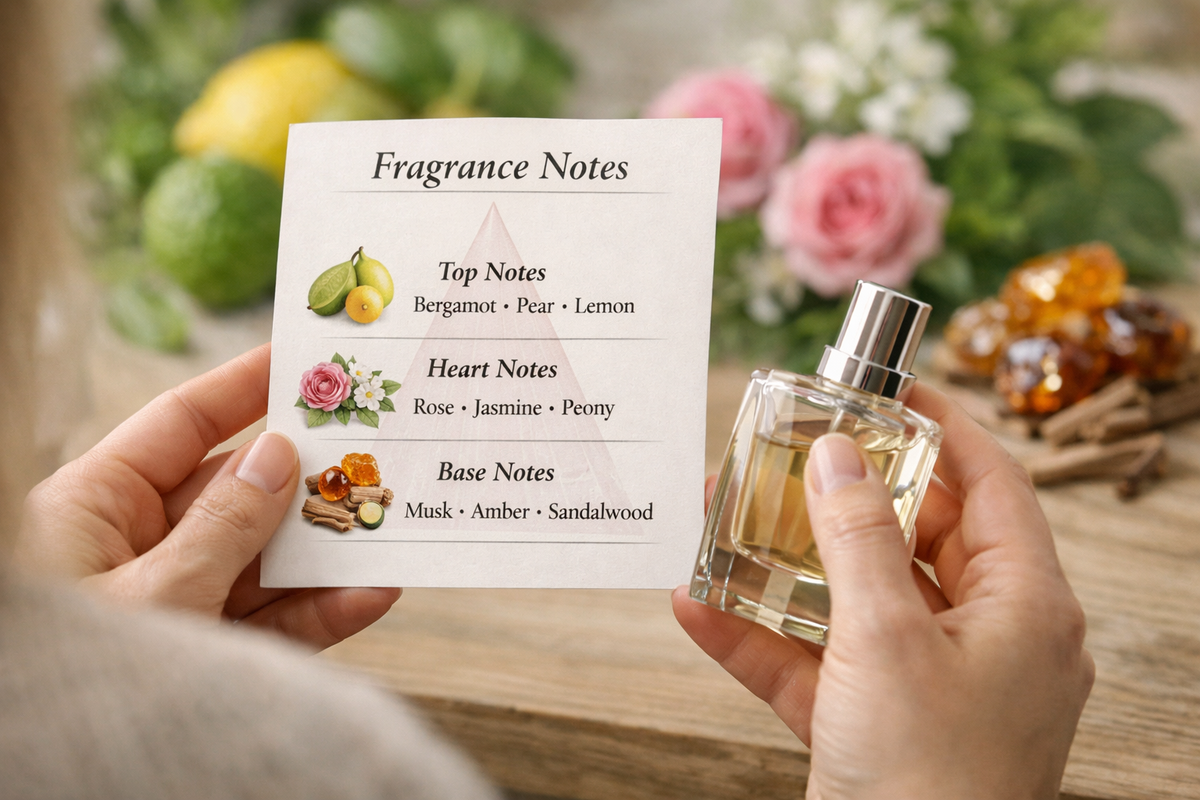
Have you ever bought a perfume because its notes sounded lovely, but it smelled different when you tried it? Rose, saffron, oud, and amber may sound like a perfect combination, but the actual fragrance might surprise you. That's because a note list doesn't always tell you how a perfume will smell on your skin.
Perfume notes are the scents that make up a fragrance. They fall into three groups: top, heart, and base notes. Each develops at a different pace, giving the perfume its changing scent throughout the day.
In this guide from SA by Saeed Anwar, you'll learn how to read fragrance notes, understand scent combinations, and choose a perfume that suits your taste.
What a Fragrance Note Is — and What a Note List Is Not
A perfume note list describes a fragrance, but it doesn't reveal its exact formula. A note is a scent such as rose, sandalwood, or vanilla. An accord combines different materials to create one scent impression.
So, what is an accord in perfume? Bakhoor and amber are common examples. Their scents can be created by blending several materials rather than using one ingredient.
Remember, a note list gives you an idea of what to expect, not a guarantee. The fragrance may smell different on your skin depending on its formula and whether it's an oil or alcohol-based spray.
Top, Heart and Base Notes: What Each Layer Tells You
Most perfumes are described using a fragrance pyramid, also known as the perfume pyramid. It divides a fragrance into three layers according to how quickly the different scent materials evaporate. This property is called volatility. In simple terms, some materials fade quickly, while others stay noticeable for much longer.
These three layers are known as top, heart and base notes.
Top notes, sometimes called head notes, are the first scents you notice after applying a perfume. As they begin to fade, the heart notes become more noticeable. These form the main character of the fragrance. Finally, the base notes settle in and often remain on your skin for hours. The stage when a perfume has settled, and its deeper notes are more noticeable, is called the dry down.
Here's how the three layers generally compare:
|
Layer |
Commonly Cited Window |
What It Tells You Before Buying |
Typical Note Types |
|
Top (head) notes |
Roughly the first 5–15 minutes, sometimes up to about 30 minutes |
These give you your first impression of the perfume, but they don't tell you how it will smell later. |
Citrus, light fruit, herbs, light spice, saffron |
|
Heart (middle) notes |
Roughly 2–4 hours |
These help define the perfume's main character and give you a better idea of its overall style. |
Florals (rose, jasmine), spices, fruits |
|
Base notes |
Roughly 4–10+ hours |
These are the deeper scents that may remain on your skin long after the opening has faded. |
Oud, amber, musk, sandalwood, patchouli, vanilla, resins |
These timings are general estimates rather than fixed rules. The actual duration depends on the fragrance formula, concentration, skin, and other factors.
The important thing to remember is that you shouldn't judge a perfume by its opening alone. The heart and base give you a better idea of how the fragrance will develop. If you're looking for base notes for long lasting perfume, materials such as oud, amber, musk, and sandalwood are worth paying attention to. However, longevity depends on the complete formula, not simply the presence of these ingredients.
If you've ever wondered why a perfume can fade so fast, the ingredients, concentration, and way you apply it can all play a part.
How Notes Behave in Oil-Based Perfumes and Attars
Perfumes don't all develop in the same way. The perfume pyramid helps explain how a fragrance changes over time, but oil-based perfumes and attars can smell different from alcohol-based sprays.
Perfume notes in oil-based perfume often develop more slowly. Since these perfumes don't have the same quick alcohol evaporation as sprays, their scent may change gradually on your skin. You might notice a softer opening rather than a strong burst of fragrance that fades quickly.
However, every perfume is different. Some oils change noticeably after application, while others smell much the same throughout the day. The ingredients and the way they're blended make a difference.
The same is true for attar. Its scent depends on the materials used, so not every attar develops in the same way.
This is worth keeping in mind when choosing oud perfumes. Oud has a deep, rich scent and is often used as a base note. In an oil blend, you may notice it from the beginning rather than only after the lighter notes fade. That's why checking the base is important when buying oud-based oils.
Want to explore different fragrance profiles? Browse our alcohol-free oud oils to see how different oud notes explained in product descriptions come together in each fragrance.
The 4-Step Method to Read Any Note List
You don't need to know every fragrance ingredient to make a better buying decision. A few simple checks can help you work out whether a perfume is likely to suit your taste.
Here's a practical way to choose perfume by notes before you spend money on a bottle.
- Find the base first. Start by checking the base notes. Ask yourself whether you'd enjoy wearing those scents for several hours. If you don't like oud, musk, or heavy woody fragrances, for example, a perfume built around them may not be the right choice, even if its opening sounds appealing.
- Read the heart. Next, look at the middle notes. These give you a clearer idea of the perfume's main character. Is it mostly floral, spicy, woody, or sweet? Think about the fragrance styles you normally enjoy and see whether the heart notes match them.
- Spot accords and vague words. Pay attention to terms such as amber, bakhoor, and woody. These can describe a combination of materials rather than one ingredient. Words such as "exotic" and "mystical" are less specific, so look for actual notes that help explain the scent.
- Match it to your life. Consider when and where you plan to wear the perfume. A rich, smoky fragrance might be just what you want for an evening out, while a lighter citrus scent may feel more comfortable during a hot afternoon. Your personal taste matters, too, so don't rule out a fragrance simply because it doesn't fit a traditional category.
That's the basic method. Once you get used to checking the base, heart, accords, and intended use, you'll find it much easier to read fragrance notes and compare different perfumes.
Reading Real Notes: Three Examples From Our Collection
Reading about fragrance notes is helpful, but looking at actual perfumes makes the process easier to understand. Let's apply the four-step method to three fragrances from our collection.
The examples below use the notes published by the brand on each product page. They're intended to show you how to interpret a fragrance description, rather than rank one perfume above another.
Sahara: A Base-Led Perfume
The first thing to notice about Sahara is its base of oud, amber, musk, and sandalwood. These notes give the perfume its rich, warm, and woody character.
If you enjoy deep, woody fragrances with a touch of musk, Sahara might be a good choice for you. But if you prefer light, fresh scents with a citrusy feel, you may find it a little too rich for your taste.
Amber is another note worth knowing about. It's often made by blending different materials to create a warm, rich scent rather than using a single ingredient.
Looking at these notes before buying can help you decide whether Sahara is the kind of fragrance you'd enjoy wearing.
Oud & Roses: A Floral Opening Over a Woody Base
Oud & Roses opens with fresh rose and a touch of citrus. At first, it has a light, floral feel. But as the fragrance settles, the oud, patchouli, sandalwood, and musk become part of the experience, giving it a deeper, woody character.
If you enjoy rose perfumes but don't want something purely floral, this combination is worth exploring. The rose brings a fresh touch, while the woody and musky notes add depth. It's also a good reminder to check the full note list before buying a perfume, as the opening doesn't tell you everything about how it will smell later.
Aila: A Gourmand Profile
Aila combines saffron, pear and red berries in its opening, followed by a sweet, cacao-led base. The mix gives it a gourmand character, a term used for fragrances with sweet notes that remind you of desserts or ingredients such as chocolate, vanilla and sugar.
If you like sweet perfumes, Aila may be a good option to explore. The fruity opening adds a different touch to the sweeter base, so there's more to the fragrance than its first impression.
Think about the scents you usually enjoy before making your choice. If sweet, rich perfumes are your thing, this profile may suit you. And don't feel you have to save certain fragrances for specific occasions. What matters most is whether you enjoy wearing them.
A Quick Note-Family Cheat Sheet
Perfumes are also grouped into olfactive families, which are simply categories based on their scent characteristics. These groups make it easier to compare fragrances and find styles you might enjoy.
Here's a quick look at some common families and what you can generally expect from them.
|
Fragrance Family |
What to Expect on Skin |
Longevity Tendency (General) |
Typically Suits |
|
Woody / Oud |
Deep, earthy, smoky or resinous, depending on the materials used |
Often long-lasting when supported by persistent base materials |
Evenings, cooler weather and those who enjoy rich scents |
|
Floral (rose, jasmine) |
Can smell fresh, soft, powdery or rich, depending on the flowers and blend |
Varies; some floral fragrances last longer when combined with persistent base notes |
Special occasions, daytime wear and floral fragrance lovers |
|
Musk / Amber |
Warm, soft, and sometimes close to the skin |
Often moderate to long-lasting, depending on the formula |
Everyday wear and those who prefer warm scents |
|
Gourmand (sugar, cacao, vanilla) |
Sweet, rich and sometimes reminiscent of desserts |
Can last well when the formula contains persistent materials |
Sweet fragrance lovers and those who enjoy rich scent profiles |
|
Fresh / Citrus |
Light, clean and bright, often with a crisp opening |
Often shorter-lived, although the full formula makes a difference |
Hot weather, office wear and those who prefer fresh scents |
These descriptions are general rather than guarantees. Two perfumes from the same family can smell completely different, and their staying power may vary considerably.
Use the table as a starting point when exploring fragrances. If you already know that you enjoy woody perfumes, for example, you can use that preference to narrow down your options. You can then compare the individual notes to find a fragrance that suits your taste more closely.
Red Flags and Green Flags in a Note List
A long list of fragrance notes doesn't automatically mean a perfume is better or more complex. What matters is whether the description gives you enough useful information to understand the fragrance.
Here are a few things to look for when comparing products.
Red flags:
● A list containing 20 or more notes without a clear explanation of the fragrance's overall character.
● No base notes listed, leaving you with little information about how the fragrance may develop.
● Only the opening notes are mentioned, making it difficult to understand the rest of the scent.
● Vague descriptions such as "exotic" or "magical" without any specific notes to explain what the perfume smells like.
Green flags:
● A clear breakdown of the top, heart, and base notes.
● A base that gives you a useful idea of the fragrance's overall character.
● Clear descriptions of accords, without presenting every scent impression as a single ingredient.
● Enough information to help you compare the fragrance with scents you already enjoy.
There's one more thing to consider if you're interested in oud perfumes. The word "oud" on a product description doesn't automatically mean the fragrance contains natural oud oil. Some perfumes use an oud accord to recreate aspects of its scent, while others may contain natural oud materials.
Neither approach automatically makes a perfume better than another. The materials used, the overall blend, and the quality of the finished fragrance all matter. However, the difference can affect the scent profile and price.
If you'd like to understand the distinction, our guide on whether the oud is genuine explains what to look for when buying oud oil.
Why Notes Alone Won't Decide It — Test Before You Commit
Even a detailed note list can't tell you exactly how a perfume will smell on your skin. Two people can wear the same fragrance and notice small differences in how it develops. Skin chemistry, application, and the fragrance formula can all influence the result.
That's why it's worth taking a little time to try a perfume before buying a full bottle. If you want to test perfume on skin before buying, follow these simple steps:
● Apply it to your skin. Spray or apply a small amount to a suitable area of skin rather than relying entirely on a paper testing strip. A strip can help you compare fragrances, but it won't show you how the perfume develops on your skin.
● Give it time. Wait around 20 to 30 minutes before making your first judgement. This gives the opening time to settle, although the fragrance may continue to change for several hours.
● Check the dry down. Smell the fragrance again later in the day. This helps you understand its deeper character and whether you enjoy the scent after the opening has faded.
Try not to rush the decision. A perfume that smells wonderful in the first few minutes might not suit your taste later, while another fragrance may become more appealing as it develops.
If you're not ready to commit to a full bottle, you can try a tester first. It's a practical way to experience the fragrance on your skin and decide whether its opening, heart, and base work for you.
Final Thoughts
Buying perfume becomes easier when you know what to look for in a fragrance description. Instead of choosing a bottle based only on its opening notes, start with the base, check the heart, look for accords, and think about when you plan to wear it.
These four steps won't tell you exactly how every perfume will smell, but they'll help you compare options and avoid buying something that doesn't match your preferences.
If you're looking to buy oud perfume oil in Pakistan, you can explore our oud collection and compare the fragrance descriptions before choosing a scent. Take your time, read the notes carefully, and, whenever possible, try the perfume on your skin before making your final decision.
Frequently Asked Questions
What are perfume notes?
Perfume notes are the different scents that make up a fragrance. They are grouped into top, heart, and base notes, helping you understand how a perfume changes over time.
How long do top, heart, and base notes last?
Top notes usually last 5–15 minutes, heart notes around 2–4 hours, and base notes 4–10+ hours. The actual time varies from one perfume to another.
What is the difference between a note and an accord?
A note is a scent like rose or sandalwood. An accord combines different materials to create a particular smell, such as amber or bakhoor.
Does the order of notes tell me how much of each is used?
No. The list describes the scent, not the formula. The first note isn't always the strongest.
Do notes work differently in perfume oils than in sprays?
Yes, they can. Perfume oils often develop more gradually than alcohol-based sprays, but the result depends on the fragrance.


