
Cart
0
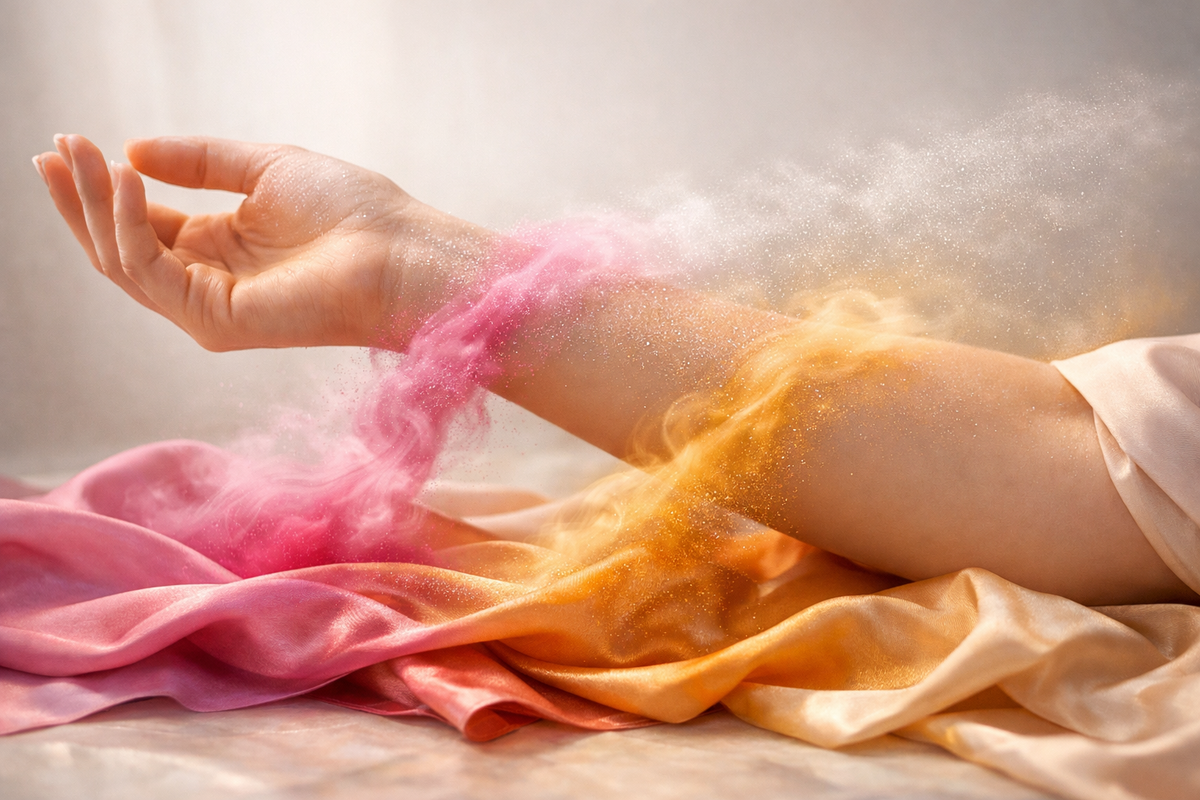
Have you ever noticed that your favourite perfume smells one way on your wrist but different on your scarf? The aroma may be more heightened on the skin and more earthy on the garment. This is a normal difference and can be attributed to the way the fragrance interacts with each surface.
Why does perfume smell different on clothes vs skin? Skin is warm, naturally oily, and chemically active - a fragrance will transform as its ingredients evaporate. Fabric is cooler and has no living chemistry, so the smell is often "flatter" and less complex. Being aware of this distinction can lead to an appreciation of everything from common place sprays to traditional oud and attar.
You can explore more fragrances at SA by Saeed Anwar.
1. The Short Answer: A Living Surface vs. an Inert One
The difference between perfume on skin vs. fabric is the way in which each surface interacts with the perfume. Skin offers thermal insulation, natural oils, and variable surface features. Fabric will most often retain the scent, but not in the same way or at the same level of warmth and chemistry.
A perfume evolves as well. It can have a fresh and citrus open, or a floral and spicy heart. Subsequent notes, deeper ones, like woods, musk, and amber can start to stand out more.
This change is known as the fragrance's development. These stages can evoke a more complete aroma experience on skin. The scent on fabric could be more subtle and/or more specific with its layers of scents.
Neither surface is necessarily superior. It is merely an exhibition of various aspects of the same scent.
2. What Skin Does to a Fragrance (and Fabric Doesn't)
Body heat and fragrance
Your skin stays warm, although its temperature changes with your surroundings and activity. This warmth affects evaporation, the process through which a liquid turns into vapour. Different fragrance ingredients evaporate at different rates, affecting which smells you notice first and which become more apparent later.
Perfumes are often described through three groups of notes:
● Top notes: The first scents you notice, often fresh or citrusy.
● Heart notes: The middle character, which may include floral, spicy, or aromatic scents.
● Base notes: Deeper elements, such as woods, musk, and resinous accords.
These notes overlap rather than following a strict timetable. Their balance depends on the fragrance formula and the surface carrying the scent.
Different fragrance ingredients have different levels of volatility, meaning they evaporate at different rates. This affects which smells you notice first and which become more apparent later.
Natural oils and skin chemistry
The surface of the skin has natural oils, including sebum, that impact the fragrance. The perfume may smell different from person to person due to differences in skin moisture and oil levels.
Other skin chemistry factors include the composition of the skin's microbiome, a community of microorganisms that live on the skin, and the pH level of the skin. These can be responsible for the variations in scent perception, but they cannot account for the variations that occur alone.
Fabric doesn't have this living surface. Consequently, the same perfume can have a softer, sharper, or woody scent on a garment than on the wearer.
3. What Fabric Does Instead: Why Scent Can Smell Flat
When fragrance comes into contact with clothing, some ingredients attach to the fibres. This is known as adsorption, which means molecules collect on a surface. The amount and type of fragrance retained can vary with the material, its weave, and the perfume formula.
Without body heat, a fragrance may release from fabric more quietly. Its opening can become less noticeable, leaving a scent that seems simpler or more focused on particular notes.
Why does perfume smell flat on clothes?
Some perfumes have bright openings that give them their first impression. When those notes become less noticeable, the fragrance may seem less lively. Heavier materials can remain noticeable on the fibres, giving the scent a woody, musky or resinous character.
The dry down is the stage when the opening has settled, and the deeper character becomes more noticeable. On skin, this change may feel gradual. On fabric, the difference between stages can be less obvious, creating what is often called a linear scent: a fragrance that seems to maintain much the same character.
Does perfume smell stronger on clothes? Sometimes it can seem stronger or steadier because the scent is released differently. However, a steady smell does not necessarily mean a more complete fragrance.
Laundry detergent, fabric softener, and traces of older perfumes can also affect the smell of clothing. For a separate look at scent longevity, read our guide on how to make perfume last longer.
4. Side-by-Side: The Same Fragrance on Skin vs Fabric
These are general tendencies. Results vary with the fragrance, the person, and the fabric.
|
Factor |
On Skin |
On Fabric |
|
Warmth |
Body heat affects evaporation and scent release. |
Usually cooler, so scent may release more quietly. |
|
Surface chemistry |
Natural oils and skin conditions affect the fragrance. |
Fibres and laundry residue may influence the scent. |
|
Scent development |
May reveal changing top, heart, and base notes. |
Often smells flatter or more linear. |
|
What remains |
The scent changes as ingredients evaporate. |
Deeper notes may remain noticeable on fibres. |
|
Strength |
May change as skin warms or cools. |
Can seem steady or strong. |
|
Risks |
Some ingredients may irritate sensitive skin. |
Oils can leave marks on clothing. |
|
Best for testing? |
Gives a personal picture of the fragrance. |
Shows only how the scent behaves on that material. |
5. Does the Type of Fabric Change the Scent?
Yes. Different fibres interact with fragrance in different ways. The weave, finish and condition of the fabric also matter, so the same perfume may smell different on two garments.
|
Fabric |
Typical Behaviour |
Practical Note |
|
Cotton and linen |
Generally absorb and hold fragrance well. |
Oils may mark light-coloured fabric. |
|
Wool and cashmere |
Commonly reported to retain scents well. |
Test an inconspicuous area first. |
|
Silk, satin and chiffon |
Can hold fragrance but are delicate. |
Direct contact with oils may leave marks. |
|
Polyester and nylon |
May hold fragrance differently from natural fibres. |
Results depend on the weave and finish. |
Fabric fragrance retention refers to how well a material holds a noticeable scent. It does not mean the perfume will smell exactly as it does on skin.
Does perfume oil stain clothes?
Yes, it can. Concentrated oils may leave greasy marks, especially on pale or delicate materials. Check the garment's care instructions and test a hidden area, such as an inner seam, before exposing the fabric to fragrance. A patch test helps reduce the risk but cannot guarantee a mark-free result.
Learn more about how oils compare with sprays.
6. What This Means for Oud and Attar
The strong, deep, plush, smoky, woody, and earthy notes are common in oud perfumes, but each blend is unique. For a perfume to be called oud, it will show its true colours as it matures when applied to skin. When wearing oud on clothes, you may notice more of its deep, woody character while some lighter notes seem less noticeable.
It is the same with attar on fabric. Oil-based fragrances also have a different formula from alcohol-based sprays; thus, they can react with surfaces in different ways. But an oil-based perfume doesn't necessarily work for clothing.
For a more nostalgic fragrance, try the alcohol-free oud oils from SA by Saeed Anwar. Keep in mind that concentrated oils may stain fabric; test a hidden area of the fabric and read the care label before using.
How is bakhoor smoke different?
Bakhoor creates its scent when aromatic materials are heated or burned. Bakhoor smoke on clothes can leave a warm, woody scent as aromatic compounds and tiny particles settle on the fibres.
This differs from spraying perfume directly onto fabric. A spray deposits its liquid formula on the material, while bakhoor smoke carries aromatic material through the air. The final scent depends on the blend, fabric, and surrounding conditions.
Explore traditional fragrance options in our bakhoor collection.
7. Use Fabric as a Tool: The Next-Morning Scarf Test
A scarf or collar can offer a useful clue about how a fragrance changes after wearing it. You do not need to treat this as a scientific test; simply compare what you notice on different surfaces.
First, wear the fragrance on your skin and notice its opening. If you already know the garment is suitable for fragrance contact, compare the scent on the fabric. The next morning, smell the scarf or collar and notice whether the fresh notes remain noticeable or the scent seems more woody and musky.
This can help you recognise which parts of a fragrance remain noticeable on fabric. It cannot identify the exact ingredients left behind or prove whether an oud oil is genuine.
When buying perfume, test perfume on skin before buying whenever possible. Allow around 20–30 minutes for the opening to settle before deciding how you feel about the fragrance. Its character may continue changing afterwards.
You can also try a tester first before choosing a full-size fragrance.
8. Three Myths About Perfume on Clothes
Myth 1: If it smells better on my shirt, it is a better perfume.
Not necessarily. Your shirt may bring out the woody or musky side that you prefer. Skin may reveal more of the fragrance's changing character. Your preference is what matters.
Myth 2: Perfume always smells stronger on clothes.
Not always. Some fabrics hold noticeable scents well, but the result depends on the material and fragrance. A steady smell may also be less complex.
Myth 3: Fabric is simply skin that makes perfume last longer.
Fabric and skin behave differently. Skin provides warmth and natural oils, while fabric interacts with fragrance through its fibres. This affects the scent's character, not just how long it remains noticeable.
Final Thoughts
The same fragrance can smell different on skin and fabric because each surface affects how its ingredients behave. Skin often reveals more changes, while fabric may emphasise the deeper notes.
If you want to buy alcohol-free oud oil in Pakistan, explore different scent profiles and test a fragrance on your skin before choosing. You can browse our oud collection to discover available options.
9. Frequently Asked Questions
Why does the same perfume smell different on clothes and skin?
Skin is warm, oily, and chemically active, so fragrance can change as its ingredients evaporate. Fabric is cooler and lacks the same living chemistry, which often makes the scent smell simpler.
Does perfume smell stronger on clothes?
It can seem stronger or steadier because fragrance may be released differently from fabric. However, this does not necessarily mean you are smelling the fragrance's full character.
Does fabric type change how a fragrance smells?
Yes, generally. Cotton, linen and wool can hold fragrance well, while some synthetic fabrics behave differently. Weave, finish, and laundry residue also affect the result.
Can perfume oil or oud stain clothes?
Yes. Concentrated oils may leave marks, especially on light-coloured or delicate materials. Check the care instructions and test a hidden area first.
Should I judge perfume from a shirt or paper strip?
Use these surfaces to explore the scent, but do not rely on them alone. Testing on your own skin and allowing the fragrance to develop gives you a better idea of how it smells when worn.


