
What Is Oud Perfume? Complete Beginner’s Guide
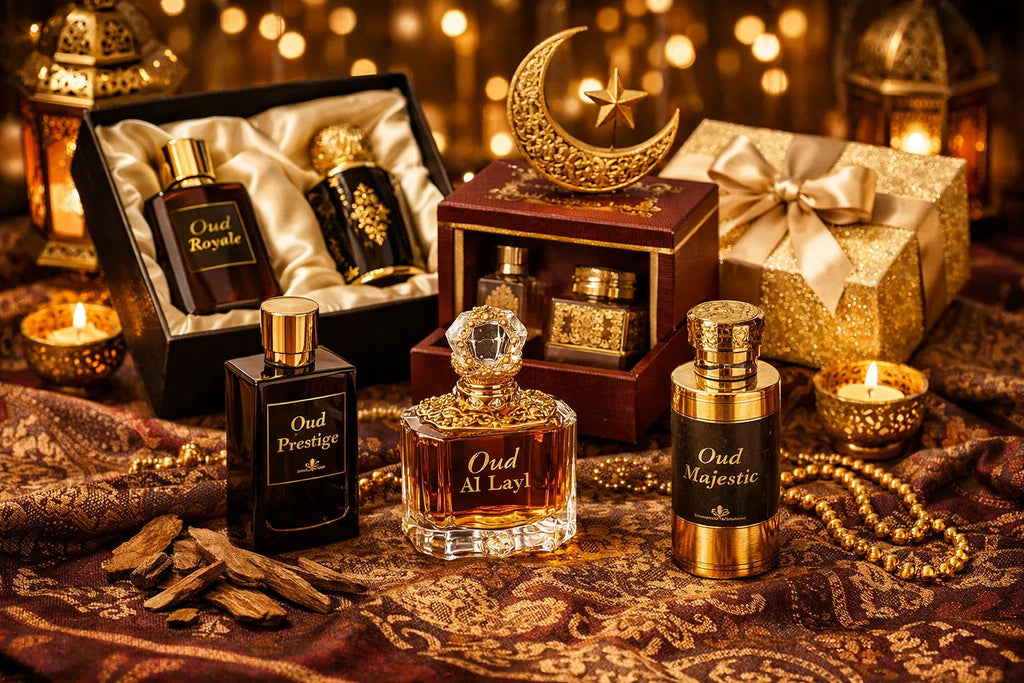
If you have ever come across the word oud and wondered what it means, you are not alone. In simple terms, oud is a rare and luxurious fragrance derived from a tree called agarwood. Unlike many perfumes that fade within a few hours, oud stays on your skin and evolves beautifully by combining with your natural scent.
As a beginner smelling oud for the first time, you may find the intensity overwhelming. Give it 20 minutes — the scent blooms and becomes something truly unique on your skin. This guide covers oud meaning, oud fragrance oil, oud history, types, benefits, and how to wear and buy it safely.
What Does Oud Mean in Arabic and in Perfumery?
The word oud (عود) comes from Arabic, and it literally means wood or stick. In the context of fragrance, oud meaning refers to the dark, resinous substance produced inside the Aquilaria tree (also called agarwood) when it becomes infected by a specific mould or fungus.
This infection causes the tree to produce a rich, aromatic resin as a defence mechanism. The result is one of the most sought-after and expensive raw materials in the world of perfumery. When people ask what does oud mean in perfumery, the answer is: a deep, woody, smoky, and complex scent that forms the heart of many luxury fragrances.
Key keyword note: The term "oud meaning" is often searched by people new to Middle Eastern or luxury fragrance. Oud is sometimes spelled as "aoud" or "oudh" — all refer to the same ingredient.
Oud Perfume History and Origins
Oud comes from a rare tree called agarwood, found mostly across the Middle East and Southeast Asia. When this wood is infected by a fungus, it produces a dark, fragrant resin — and that resin is what we call oud. Understanding oud perfume history helps explain why this fragrance carries such high cultural and monetary value.
|
Era |
Oud's Use |
Key Regions |
Modern Influence |
|
Ancient |
Incense in temples |
India, SE Asia |
Started smoky scents |
|
Medieval |
Personal oils & attars |
Arabian Peninsula |
Developed rich oil blends |
|
Modern |
Luxury perfumes |
Worldwide |
Global oud perfume blends |
This history shows how oud has been used for centuries, carrying ancient spiritual rituals into the modern world of high-end fragrance.
Types of Oud Perfume
There are several oud perfume types, and each one smells and evolves differently on the skin.
Pure Oud Oil
Pure oud oil is thick, concentrated, and incredibly long-lasting — sometimes lingering for days if not washed off. It is also the most expensive form. This is for those who want the full, raw oud experience.
Synthetic Oud (Accords)
Synthetic oud is crafted to recreate the oud scent by blending other fragrance molecules. It is lighter, more affordable, and a great starting point for beginners exploring oud for the first time.
Blended Oud Perfumes
Blended oud perfumes mix oud with other notes such as rose, vanilla, sandalwood, or spices. These are the most popular option for people who want a signature scent that is distinctive yet wearable.
Oud Fragrance Oil vs Oud Eau de Parfum
Many beginners are confused about the difference between oud fragrance oil and oud eau de parfum (EDP). Here is a clear side-by-side comparison to help you decide which is right for you:
|
Feature |
Oud Fragrance Oil |
Oud Eau de Parfum (EDP) |
|
Form |
Pure oil, no alcohol |
Alcohol-based spray |
|
Concentration |
Very high (often 100% pure) |
15–20% fragrance in alcohol |
|
Application |
Applied directly to skin with a roller or dabber |
Sprayed onto pulse points |
|
Longevity |
12–24+ hours, can last days on clothes |
6–12 hours typically |
|
Scent Profile |
Raw, deep, and authentic oud character |
Refined, blended, and more wearable |
|
Price |
Higher cost per ml |
More accessible and widely available |
|
Best For |
Enthusiasts wanting full oud experience |
Everyday wear and beginners |
If you are just starting out, an oud eau de parfum is often the better choice. Once you are comfortable with the scent family, exploring oud fragrance oil becomes a rewarding next step.
Why Is Oud Perfume So Expensive?
Oud is frequently called liquid gold, and for good reason. Here are the main factors that drive its high price:
• Rarity of agarwood: Only around 2% of wild Aquilaria trees naturally produce oud resin. The rest must be artificially infected, which is a time-consuming and unpredictable process.
• Decades of growth: It can take 20 to 30 years for a tree to produce enough infected resin to be harvested for oud oil.
• Labour-intensive extraction: Separating the oud-rich wood from non-resinous wood is a slow, skilled process done mostly by hand.
• Endangered species: Several Aquilaria species are listed as endangered, limiting legal supply and driving up cost.
• High demand worldwide: Oud is a cornerstone of Arabian, South Asian, and now global luxury perfumery, creating intense demand for a very limited supply.
Pure oud oil can cost anywhere from a few hundred to several thousand dollars per tola (a traditional South Asian unit of approximately 11.7 grams). Even a small bottle represents extraordinary value per millilitre.
How to Wear Oud Perfume
Oud is concentrated, so a little goes a long way. Beginners often make the mistake of over-applying. Follow these tips:
• Apply to pulse points: wrists, neck, or behind the ears.
• Do not rub your wrists together — let the fragrance settle naturally.
• Start small. Even a single drop of oil can last for hours.
• Layer gently with neutral scents if you want a softer overall aroma.
• Use heavier ouds in the evening or cooler weather; lighter blends work better for daytime.
Benefits of Oud Perfume
Oud is not just about smelling luxurious. It carries several benefits that beginners often do not expect:
• Calming and grounding: Oud's deep, woody scent has been used for centuries in meditation and spiritual rituals for its calming properties.
• Exceptional longevity: Oud lasts for hours — sometimes all day — so you do not need to reapply constantly.
• Versatility: It pairs beautifully with florals, vanilla, or spices, making it easy to integrate into your personal style.
• Confidence boost: Wearing a distinctive, high-quality scent naturally makes you feel more polished and self-assured.
Oud Perfume vs Other Scents
Vanilla
Vanilla-based perfumes are sweet and warm, but they lack the depth and intensity that oud delivers. Vanilla sits on top of the skin; oud sinks in and evolves.
Musk
Musk is light and stays close to the skin. It feels subtle and skin-like. Oud, by contrast, is richer, more noticeable, and projects much further even in small amounts.
Synthetic Fragrances
Synthetic fragrances are made by combining artificial scent molecules. They can smell pleasant, but they often feel flat and fade quickly compared to oud, which deepens over time.
Best Oud Perfumes for Beginners
|
Perfume |
Scent Profile |
Price Range |
Why for Beginners |
|
Rose-Oud |
Sweet & Woody |
Moderate |
Classic combo; easy to wear |
|
Vanilla-Oud |
Creamy & Smoky |
Affordable |
Warm, familiar scent |
|
Amber-Oud |
Rich & Resinous |
Mid-range |
Smooth, slightly sweet |
|
Sandalwood-Oud |
Woody & Earthy |
Moderate |
Balanced for daily wear |
|
Blended Floral-Oud |
Floral with Oud base |
Moderate |
Familiar floral entry point |
How to Buy Oud Perfume
Follow this beginner-friendly guide to purchasing authentic oud:
• Start small: Purchase a sample bottle to test before investing in a full size.
• Check ingredients: Look for clear labelling indicating whether the oud is pure, synthetic, or blended.
• Buy from reputable sellers: Established brands and specialist oud retailers are far less likely to sell adulterated products.
• Price awareness: Genuine pure oud is expensive. If the price seems too good to be true, it probably is.
• Read reviews: Community reviews on fragrance platforms can help you gauge quality before you buy.
• Smell first: Always test on your skin before committing to a full bottle.
Oud Perfume Safety and Troubleshooting
Oud is safe when used correctly. Beginners should keep these precautions in mind:
• Patch test: Test on a small skin area first, especially with pure oils.
• Apply sparingly: One to two sprays or a single drop on pulse points is sufficient.
• Avoid rubbing: Let the scent develop naturally on your skin.
• Storage: Keep bottles in a cool, dark place away from sunlight and heat.
• Faint scent: If the scent feels too light, try applying to your hair or clothing.
• Irritation: If sensitivity occurs, dilute with an unscented carrier oil or switch to a blended oud.
Frequently Asked Questions (FAQ Schema)
The following questions are optimised for FAQ schema markup and target oud meaning, oud fragrance oil, and related search queries.
1. What does oud mean?
The word oud comes from Arabic (عود) and literally means wood. In perfumery, oud meaning refers to the rare, dark resin produced inside the Aquilaria (agarwood) tree when it is infected by a specific fungus. This resin is extracted and used to create one of the world's most prized and expensive fragrances.
2. What is oud fragrance oil?
Oud fragrance oil is a concentrated, alcohol-free form of oud perfume applied directly to the skin using a roller or dabber. Unlike oud eau de parfum, it contains no alcohol, which makes it last significantly longer on the skin — often 12 hours or more. It delivers the most authentic and intense oud experience.
3. Why is oud perfume so expensive?
Oud is expensive because agarwood is extremely rare. Only a small percentage of wild Aquilaria trees produce oud resin naturally, and growing one to maturity takes decades. The extraction process is labour-intensive, several Aquilaria species are endangered, and global demand for oud continues to rise. All of these factors combine to make oud one of the costliest raw fragrance ingredients in the world.
4. What is the difference between oud fragrance oil and oud eau de parfum?
Oud fragrance oil is a pure, alcohol-free concentrate applied directly to the skin, offering maximum longevity and intensity. Oud eau de parfum is an alcohol-based spray with a diluted fragrance concentration, making it lighter, easier to apply, and more suitable for everyday wear. Beginners often find EDP formats more approachable.
5. How much oud perfume should I use?
A small amount is always enough with oud. For oud fragrance oil, one or two light dabs on pulse points (wrists, neck, behind the ears) is sufficient to last all day. For oud EDP, one to two sprays is the recommended starting point.
6. Can oud perfume cause skin irritation or allergies?
Some individuals have sensitivity to fragrances. If you have sensitive skin, always do a patch test before full application. For those prone to irritation, blended oud formulas or oud eau de parfum are gentler options compared to pure oud oil.
7. How long does oud last on the skin?
High-quality oud fragrance oil can last 12 to 24 hours on the skin and may linger on clothing for several days. Oud eau de parfum typically lasts 6 to 12 hours depending on skin type, climate, and the specific formulation.
8. Is oud suitable for beginners?
Yes, oud is accessible for beginners when you choose the right format. Blended oud perfumes that mix oud with rose, vanilla, or sandalwood are the most beginner-friendly. Pure oud oil is an advanced experience best explored once you are familiar with the base scent profile.
Conclusion
Oud perfume is rightly called liquid gold in the world of fragrance. Its rarity, its deep roots in Arabic and South Asian culture, and its unmatched longevity make it one of the most respected and desired scents in the world. Whether you are drawn in by oud meaning, curious about oud fragrance oil, or simply looking for your first luxury perfume experience, oud has something extraordinary to offer.
For beginners, the scent may feel intense at first. Give it time — 10 to 20 minutes on your skin — and let it evolve. Start with a blended formula or a small sample, and you will quickly understand why oud has captivated the world for centuries.
RECENT POSTS