
Cart
0
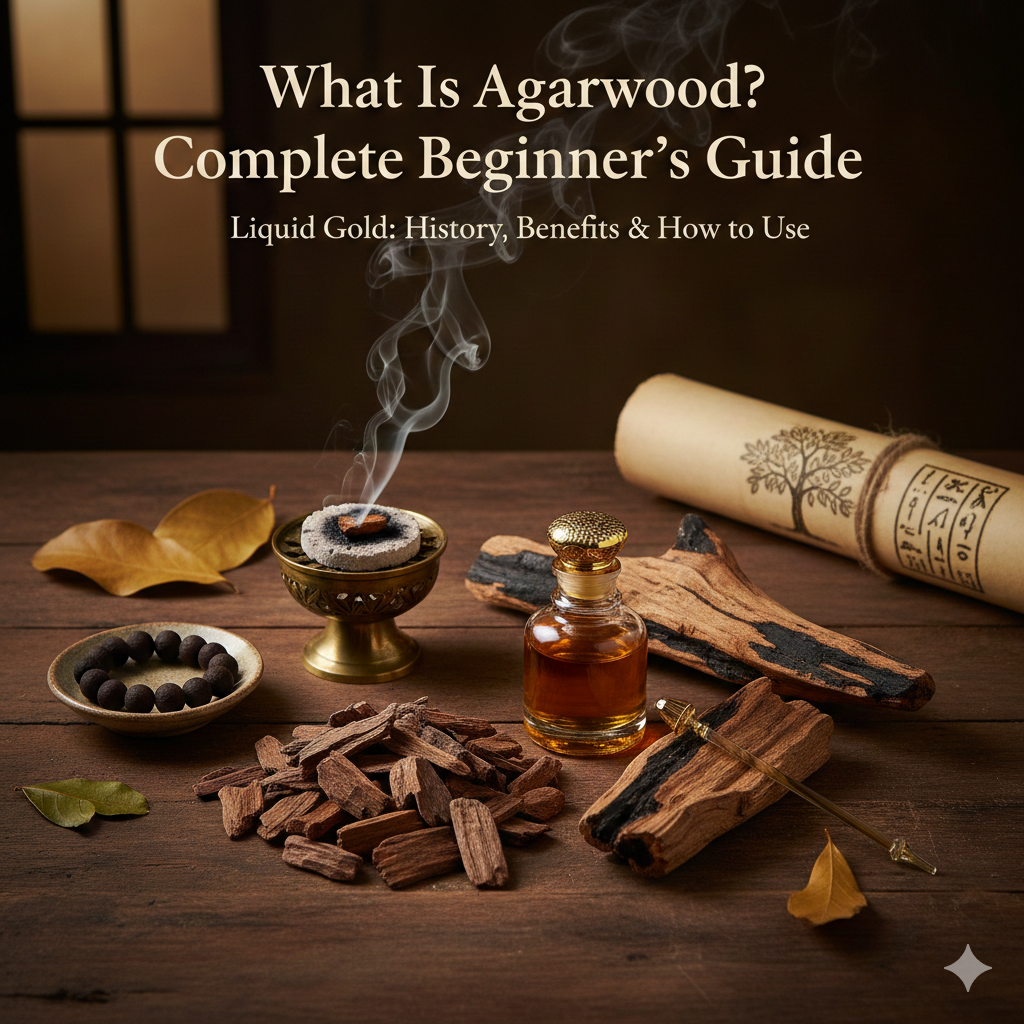
In the era of social media, you must have heard about a perfume that is considered liquid gold. Or you are a perfume lover and keep hearing the words oud and Agarwood. Many people start their journey just as a form of curiosity about “What is Agarwood?”, but the story of how it is made and its 3000 years old history makes them want to try it and smell this fragrance themselves.
What is Agarwood for beginners? Agarwood is a special type of wood that comes from the Aquilaria tree. It only forms when the tree gets sick from a certain mold. To protect itself, the tree produces a dark and fragrant resin. Over time, this resin turns part of the wood into agarwood. That resin is what gives oud its deep, rich smell. Not every tree makes it, which is why agarwood is rare and so valuable.
In this beginner-friendly scent lover guide, we will see the history of Agarwood, its 17 benefits, and how you can use it safely as a beginner.
Agarwood History and Origins
What Is Agarwood? It is a fragrance that is so deep and comes from a very rare tree. It has been loved and used by people back from 1400 B.C. When you look at agarwood history, you see it was at the center of ancient rituals, from Egyptian mummification to Ayurvedic healing. It is the only scent that has been prized by every major civilization for its ability to treat both the spirit and the body.
Here is a quick look at how agarwood history has evolved:
|
Era |
Agarwood Use |
Key Regions |
Modern Impact |
|
Ancient (1400 BC) |
Ritual incense and mummification |
India, China, Egypt |
Laid the foundation for smoky and sacred scents |
|
Medieval (8th Century) |
Used for breathing and chest problems |
Middle East, Southeast Asia |
Gained the reputation of being liquid gold |
|
Traditional (1800s) |
Tinctures to support qi and vitality |
East Asia, Japan |
Led to the production of high-grade agarwood powder |
|
Modern (2026) |
Luxury perfumery and oud fragrances |
Worldwide |
Recognized as a global luxury material |
This use of Agarwood from centuries ago till today's modern world shows how it still has not lost its charm and importance in the lives of people. If you want to know more about its roots, you can check out fragrance history resources.
What Are the Types of Agarwood?
There are different agarwood types, and each one smells different and offers a unique level of intensity. Knowing these differences helps you figure out which one fits your budget and your needs.
1. Wild Agarwood: This is the rarest and most expensive type. It forms naturally in forests over many years. Because of this, it is often called Dehn Al Oud, meaning the richest part of the wood.
2. Cultivated Agarwood: This type is grown on farms in a controlled way. It is more sustainable and easier to find. Many beginners start with this option because it protects natural forests.
3. High Resin (Sinking Grade): This is a very strong and rich type of agarwood. It contains so much natural oil that it sinks in water. This is one way people know it is high quality and authentic.
Knowing these agarwood types gives you an initial idea of where to start your journey of discovery.
How to Use Agarwood
Because agarwood is so rich and complex, a little goes a long way. Beginners often wonder how to use agarwood correctly without wasting this precious material.
-
For the Home: Burn small chips on charcoal to create a smoky, resinous atmosphere.
-
For the Body: Apply the oil to pulse points. Arabian traditions focus on longevity, so even a few drops of original oud oil can last you all day.
-
For Wellness: Use the smoke or oil during meditation to help you feel grounded and calm.
For safety, always follow IFRA fragrance safety guidelines for skin application to ensure your experience is comfortable.
Benefits of Agarwood
The benefits of agarwood aren't just about smelling luxurious; it is about holistic wellness. In Arabian and East Asian traditions, it is a symbol of prestige and health. Here are the 17 benefits of it;
1. Helps body energy flow: Eases deep body pain and stiffness.
2. Improves overall strength: Traditionally used to boost energy and balance inside the body.
3. Supports skin healing: Used on skin problems like itching, infections, and irritation.
4. Relieves joint and body pain: Helpful for arthritis and long-term aches.
5. Used for liver issues: Traditionally given for yellowing of skin and eyes.
6. Soothes damaged skin: Earlier used to calm painful skin conditions.
7. Calms the stomach: Helps with vomiting, gas, and stomach discomfort.
8. Supports chest and lung health: Used for chest pain and breathing discomfort.
9. Calms the nerves: Helps with stress, anxiety, and restlessness.
10. Supports kidneys and liver: Helps the body clean waste naturally.
11. Used in serious illnesses: Traditionally taken for long-term lung and stomach problems.
12. Reduces bloating: Helps release gas and excess water from the body.
13. Helps with asthma: Makes breathing easier by clearing airways.
14. Supports heart health: Helps improve blood flow and circulation.
15. Helps weakness and tiredness: Used when the body and mind feel weak.
16. Supports recovery after childbirth: Traditionally given to women after delivery.
17. Stops cramps and spasms: Helps sudden stomach or breathing spasms.
Agarwood vs Other Woods
Here are the differences between agarwood vs other woods to have some form of idea about why this one is the most luxurious scent.
-
Sandalwood: Sandalwood is naturally creamy and sweet, and agarwood is its opposite, as it is more bold, smoky, and woody.
-
Cedar: Cedar is fresh and simple, but agarwood develops throughout the day when it blends with your natural scent.
-
Value: Agarwood is called "liquid gold" because its resin develops so slowly, making it much more valuable than common aromatic woods.
Best Agarwood Products for Beginners
We have listed some of the best agarwood products for beginners below, so it is easy to pick what fits your lifestyle.
|
Product |
Type |
Benefits |
Price Range |
|
Oud Oil |
Pure oil |
Very long-lasting scent that can stay for 24 hours or more |
Higher |
|
Agarwood Chips |
Raw wood |
Used as traditional incense at home |
Moderate |
|
Bakhoor |
Blended incense |
A mix of woody, floral, and rich aromas |
Affordable |
|
Agarwood Bead Bracelets |
Natural wood |
Light and steady scent you notice throughout the day |
Moderate |
How to Buy Agarwood
If you want to know how to buy agarwood that is original and authentic, you need to be aware of the quality.
-
Start small: Buy samples to test the aroma first.
-
Check the resin: Real agarwood has irregular dark streaks; fakes often look too perfect.
-
Price awareness: Authentic agarwood costs more because it is rare. Cheap options are usually synthetic blends.
-
Reputable sellers: Always buy from trusted sources to ensure you are getting genuine "liquid gold."
To stay safe, follow this consumer fragrance safety guide to understand the difference between pure and synthetic products.
Agarwood Safety and Troubleshooting
Agarwood safety is important for a great experience. While it is a natural product, beginners should follow these tips:
-
Patch Test: Always test oil on a small area of skin first.
-
Storage: Keep your agarwood in a cool, dark place to preserve its resin.
-
Heat Control: If burning chips, use a lower heat to avoid a "burnt" smell.
Frequently Asked Questions (FAQs)
-
What makes agarwood so expensive? It takes years to form and is very rare to find in the wild.
-
How is agarwood harvested? The resinous parts are carefully carved out of the Aquilaria tree.
-
Can agarwood be used for skin issues? Yes, it is often mixed with oils to treat inflammation.
-
Is agarwood safe for daily use? Yes, it is perfect for daily luxury and spiritual rituals.
-
How do I know if agarwood is pure? Check for longevity and a complex scent that develops over time.
Conclusion
Agarwood is one of the rarest and most treasured scents in the world, often called liquid gold. Just learning how it forms—deep inside a tree over the years, as the tree protects itself from a rare mold—can make you stop and marvel at nature. Its rich, smoky aroma has traveled through centuries and cultures, becoming a symbol of elegance and mystery. For beginners, the scent might feel strong at first, but giving it 10 to 20 minutes to mingle with your own skin lets it reveal a warm, layered fragrance that feels almost magical. You can start gently with small samples or blended products and let yourself enjoy the journey. If you want to dive deeper, you can explore the history of Agarwood in our guide.


