
Cart
0
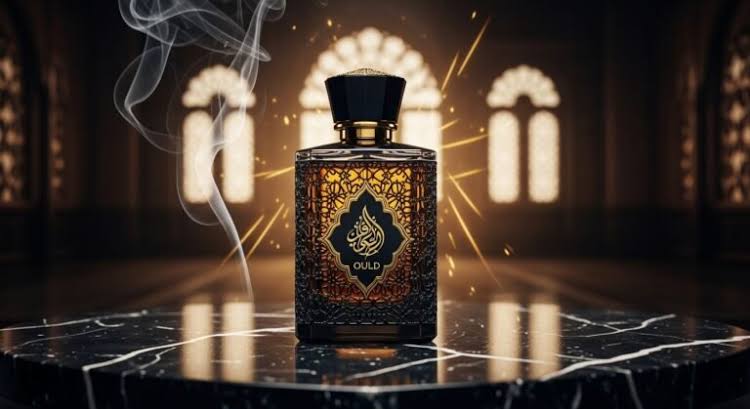
Oud is one of the most fascinating fragrance materials in the world, yet most people who wear it know very little about where it actually comes from. Behind that rich, deep smell is a story involving trees, fungi, ancient trade routes, religious traditions, Japanese ceremonies, and some seriously surprising prices.
If you think you already know the basic facts about oud, prepare to look at it differently. These 10 bizarre facts about oud reveal why this fragrance has remained so valuable for centuries. Some may sound unbelievable at first, but they are backed by historical records, scientific research, conservation sources, and established fragrance traditions.
So, let’s get into the strange and fascinating side of oud. And if you want to explore more about this fragrance world, you can visit the SA by Saeed Anwar homepage.
1. Some Oud Can Be Worth More Than Gold
One of the first questions people ask is: why is oud so expensive? The answer is not simply that it is a luxury fragrance.
The most valuable oud comes from agarwood with a high concentration of aromatic resin. Because natural resin formation is uncommon and high-quality material is difficult to find, exceptional pieces can command extraordinary prices.
The comparison with gold is not just a marketing phrase. CITES documents prices of up to around US$2 million per kilogram for the highest-quality agarwood woodchips, although prices vary greatly depending on quality, origin, age, and form.
That is why oud oil vs gold price per gram can become a surprisingly close comparison at the very highest end of the market. Of course, ordinary oud products are nowhere near these extreme figures.
For readers curious about the difference between various grades, explore our pure oud collection and see how different oud varieties are presented.
2. Oud Is Basically a Tree's Defence System
Here is one of the most interesting facts about agarwood: the beautiful smell we associate with oud begins as a defence response inside a tree.
The Aquilaria tree, often called an agarwood tree, normally has pale, relatively ordinary wood. When the tree experiences injury, microbial attack, or other stress, it can activate its defence system and begin producing aromatic compounds around the affected area.
Fungal infection is strongly linked with this process, although scientists now understand that agarwood formation is more complicated than one fungus simply “infecting” a tree. Researchers have studied fungi including Phialophora species, while newer research shows that several biological and physical factors can trigger the tree's response.
In other words, one of the world's most prized fragrance materials is produced because a tree is trying to protect itself.
The result is resin-rich agarwood, which can later be distilled to produce oud oil. You can learn more about how SA by Saeed Anwar approaches its agarwood sourcing.
Interesting Facts About Agarwood: It Does Not Grow Everywhere
Not every Aquilaria tree develops valuable agarwood. Natural formation is relatively rare, and estimates differ depending on species, location, and how researchers define a resin-producing tree.
One recent review notes that only a small proportion of trees may contain agar resin naturally, while CITES material gives broader estimates of naturally occurring agarwood in roughly 10–20% of trees of agarwood-producing species.
That scarcity helps explain why naturally formed agarwood has such a strong reputation among oud enthusiasts.
3. Only a Small Fraction of Trees Produce the Good Stuff
Imagine walking through a forest filled with Aquilaria trees and knowing that only some will contain the dark, resin-rich wood you are looking for.
That is part of what makes oud so unusual.
The resin does not automatically appear simply because an Aquilaria tree reaches a certain age. It develops in response to stress, and the amount and quality can vary considerably. Natural agarwood formation is difficult to predict, which is one reason researchers have spent years studying ways to encourage resin formation in cultivated trees.
This rarity is also why terms such as rarest oud in the world are often associated with exceptionally old, resin-rich material.
For a glimpse at a rare Indian-style oud, Hindi Qadeem is one example from SA by Saeed Anwar's collection.
4. Kynam Can Reach Jaw-Dropping Prices
If you thought the gold comparison was impressive, wait until you hear about Kynam, also known as Kyara or related names in different fragrance traditions.
Kynam is widely regarded as an exceptionally rare and valuable form of agarwood. Its scarcity and distinctive aroma have made it especially prized by collectors and incense enthusiasts.
Reported examples are astonishing. Agarwood trader Alan Mahaffey told Al Jazeera's Scent from Heaven documentary that a 2-kilogram lot of Kynam sold in Shanghai for around US$18 million, roughly US$9 million per kilogram. He also described sourcing a rarer, single 600-year-old piece weighing 16 kilograms that sold for US$20 million as a whole antique specimen, rather than at a standard per-kilogram rate. The gap between the two figures shows how much an individual piece's age, rarity, and history, not just its weight, can drive Kynam's price.
Scientific literature also describes Kynam as one of the most precious forms of agarwood, with prices sometimes reaching hundreds or thousands of times those of ordinary agarwood.
That is what makes Kynam such a remarkable part of oud history: in the right circumstances, a small piece of fragrant wood can be worth a fortune.
5. Oud Has a Written History That Goes Back Thousands of Years
Oud is not a modern luxury trend. People were using agarwood long before today's perfume industry existed.
Research on the history of agarwood records references to fragrant agarwood in Sanskrit texts as early as around 1400 BCE. The Greek physician Dioscorides also described agarwood and its uses around 65 BCE. Historical records from China show knowledge of agarwood and resin formation by around the 3rd century CE.
That means the history of oud perfume is connected to a much wider story involving medicine, incense, trade, religion, and personal fragrance.
Agarwood travelled between regions of Southeast Asia, India, China, Japan, and the Middle East, becoming valuable to different cultures for different reasons.
If you enjoy the historical side of oud, you can read more in The Timeless Allure of Oud: A Journey Through Fragrance History.
6. Assam Became Part of Oud's Long-Distance Trade Story
When people think about oud, they often picture the Arabian Peninsula. But South Asia has played an important role in the agarwood story for centuries.
Assam and the wider northeastern region of India have long been associated with agarwood production and use. Historical accounts describe agarwood products from the region, while later records show Assam's agarwood moving through wider Asian and international trading networks.
Some historical accounts also associate the development of oud oil distillation in Assam with the medieval period and describe connections with trade routes leading westward. The broader historical record confirms that agarwood moved between producing regions in tropical Asia and major consumer markets including India, the Middle East, China and Japan.
So, oud was never just a Middle Eastern fragrance. It has always been part of a much bigger Asian trade story.
That South Asian connection can still be seen in traditional Indian-style ouds such as Hindi Suyufi.
7. Oud Has a Connection to Islamic Tradition
Oud also has an important place in Islamic fragrance culture.
Agarwood, referred to as aloeswood in English translations of classical Islamic texts, appears in authentic hadith literature. In Sahih Muslim 2254, Nafi' reports that Ibn Umar used aloeswood for fumigation, sometimes with camphor, and said that this was how the Messenger of Allah, Prophet Muhammad (PBUH), fumigated.
This provides a documented connection between aloeswood and the fragrance practices of the early Muslim community.
The tradition of burning fragrant wood also remains familiar across many Muslim communities today, particularly through bakhoor, incense, and home fragrance. It is important, however, to distinguish documented religious references from later cultural practices that developed in different regions.
For readers interested in this side of oud culture, our bakhoor collection offers a modern connection to the long tradition of fragrant smoke.
8. In Japan, People “Listen” to Incense
Here is a fact that surprises many oud lovers: oud and agarwood have a major place in Japanese incense culture too.
Japan's Kodo is a traditional art centred on appreciating incense. Rather than simply saying that people “smell” the fragrance, practitioners often use the expression “listen to” incense. The Japanese concept of Mon-koh involves carefully experiencing the subtle fragrance of aromatic wood.
According to Nippon Kodo, incense culture reached Japan with Buddhism, and Kōdō later developed into a formal art during the Muromachi period. Its practices continued to develop during the Edo period.
Participants may warm aromatic wood without directly burning it and pay close attention to its changing scent.
So while oud is strongly associated with Middle Eastern perfumery today, the same precious aromatic woods became part of an entirely different and highly refined fragrance tradition in Japan.
9. “Liquid Gold” Is More Than Just a Nickname
Oud is often called liquid gold perfume, and there is a good reason the phrase has stuck.
Oud oil is highly concentrated, so you normally do not need the same amount that you might use with a conventional spray fragrance. A tiny amount can create a noticeable scent, and the aroma can develop gradually on the skin.
That also means a small bottle can last for months when used sparingly. Exactly how long it lasts depends on how often you apply it and how much you use each time.
The value of oud is therefore not only about the price of the bottle. You are buying a highly concentrated aromatic material that has a long history and can be used in very small amounts.
If you prefer concentrated fragrances, explore our oud oil collection to see the available options.
10. Oud Trees Are Protected Under International Trade Rules
There is a serious side to oud's popularity: the trees behind agarwood need protection.
The high demand for natural agarwood has contributed to pressure on wild populations, which is why international trade is regulated. CITES materials state that agarwood-producing taxa in the genera Aquilaria and Gyrinops are covered by CITES Appendix II, with controls applying to international trade and specific exemptions under the relevant annotation.
This does not mean that every oud product is illegal or that every Aquilaria tree is simply “banned.” Instead, it means international trade in covered species and their products is subject to regulations and permits.
For an oud buyer, this is a useful reminder that sourcing matters. Buying from a seller that takes responsible sourcing seriously is part of enjoying oud without ignoring where it comes from.
You can learn more about SA by Saeed Anwar's sourcing and brand story.
What This Means for You as an Oud Buyer
After learning all these facts, oud may look a little different. It is not simply another fragrance ingredient sitting inside a bottle. Its value is connected to rarity, resin formation, history, craftsmanship, and cultural tradition.
If you are looking for pure oud oil Pakistan, do not judge a bottle by its price alone. Look at what you are actually buying. Check whether the seller clearly identifies the type or origin of the oud, whether the product is presented as pure oud or a blend, and whether the brand provides useful information about sourcing.
It is also worth remembering that “strong” does not automatically mean “better.” Different oud oils can have very different personalities. One may smell woody and earthy, while another may lean sweet, smoky, leathery, medicinal, or slightly animalic.
The best choice is usually the one that matches your own taste.
For those ready to explore different varieties, browse the pure oud collection and take your time comparing the options.
Final Thoughts
Oud becomes much more interesting once you look beyond the bottle.
It begins with a tree, develops through a complex natural defence process, and has travelled across Asia and the Middle East for centuries. It appears in historical records, religious traditions, and Japanese incense ceremonies. At the end of the market, rare agarwood can even reach prices that sound more like precious stones than wood.
That combination of nature, history, and craftsmanship is what makes oud so special.
And perhaps the strangest fact of all is this: something that begins as a tree protecting itself can eventually become one of the world's most treasured fragrances.
Frequently Asked Questions
Why is oud more expensive than gold?
The highest grades of oud can cost more than gold because exceptional agarwood is extremely scarce. Only a portion of Aquilaria and other agarwood-producing trees develop significant resin, and the finest natural material can command very high prices.
Is oud a plant or an animal product?
Oud is plant-based. It comes from resin-rich agarwood formed mainly in Aquilaria and related trees. The resin develops as part of the tree's response to injury, infection, or other stress.
What is the rarest type of oud in the world?
Kynam, also known as Kyara in Japanese fragrance culture, is widely regarded as one of the rarest and most valuable forms of agarwood. Exceptional pieces have reportedly reached prices in the millions of dollars.
Is oud connected to any religious tradition?
Yes. Agarwood has a documented place in Islamic tradition. Sahih Muslim records the use of aloeswood for fumigation and connects this practice to the Prophet Muhammad (PBUH).
How long does a small bottle of oud oil actually last?
A small bottle can last for many months because oud oil is concentrated and usually applied in small amounts. The exact lifespan depends on how frequently you wear it and how much you apply each time.


